
Parametric Design with Grasshopper 1
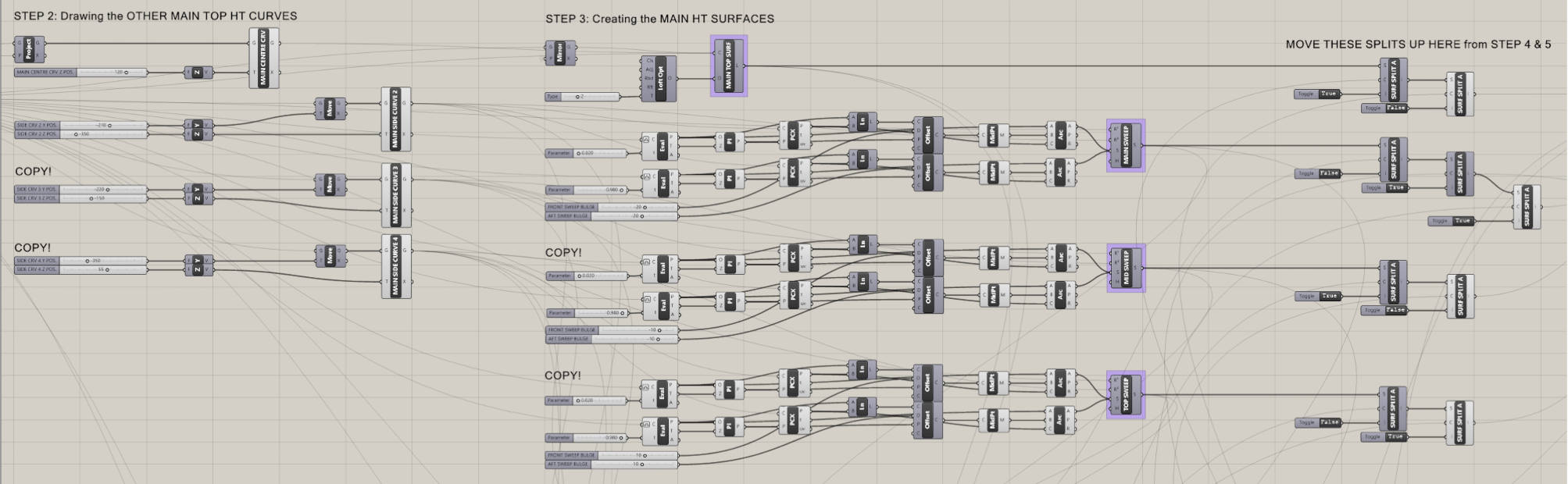
Parametric Design with Grasshopper 1 introduces practical parametric 3D modelling focused on yacht geometry, from Grasshopper fundamentals, interface and module assembly to the creation and refinement of NURBS surfaces. You will learn how to build clean, functional definitions, control relationships between geometric elements and use parameters to adjust dimensions, proportions and shapes as a design evolves. Through exercises including a cockpit, floor liner, bathing platform, sheer line, hull-side and bow surfaces and a hardtop, the course develops a workflow that combines Grasshopper with Rhino where appropriate, giving you the foundation needed to parametrically construct the centre-console boat geometry demonstrated in the course and continue developing your own definitions.

Coming Soon!
Welcome
Welcome to Parametric Design with Grasshopper 1!
This course introduces you to parametric 3D modelling with Grasshopper through a practical approach focused on the creation and control of yacht geometry. You will learn how to build relationships between geometric elements so that curves and surfaces can be adjusted parametrically as a design evolves, rather than repeatedly redrawn.
You will begin by understanding how Grasshopper works, its main strengths and limitations, and the fundamental principles behind assembling a parametric definition. From there, you will become familiar with the Grasshopper environment and progressively apply the methodology to real boat geometry, from relatively simple components to more complex surfaces.
Throughout the course, the emphasis is not simply on learning individual Grasshopper functions, but on understanding how to build clean and functional geometry, create and refine NURBS surfaces, and maintain control over the relationships that define a design.
Let’s get started!
The Course
Parametric Design with Grasshopper 1 introduces the principles and practical methods of parametric modelling within Grasshopper, the visual parametric and algorithmic modelling environment integrated into Rhinoceros 3D.
The course begins by examining the logic behind parametric modelling and the advantages it can offer when a design needs to evolve. By establishing relationships between geometric elements, changes to dimensions, proportions or defining parameters can be reflected through related geometry, allowing different design alternatives to be explored and surfaces to be progressively fine-tuned.
At the same time, the course considers the limitations of this approach. Not every element benefits equally from being created parametrically, and the setup required for smaller or highly detailed components may outweigh the advantages. You will therefore learn to consider when Grasshopper is useful for developing significant design geometry and when continuing the modelling or detailing process directly in Rhino may be more efficient.
After establishing these principles, you will become familiar with the Grasshopper working environment, its basic interface, frequently used functions, and the fundamental logic of assembling and connecting components. Particular attention is given to developing a clear and functional modelling approach rather than simply reproducing geometry through a sequence of disconnected operations.
The practical part of the course applies these principles progressively to yacht geometry. Starting from a working template, you will develop a simple cockpit, front floor liner, bathing platform and sheer line before progressing to hull-side and bow surfaces and the hardtop. Through these examples, you will work with the parametric creation and refinement of NURBS surfaces while developing greater control over shape and the relationships between different parts of the model.
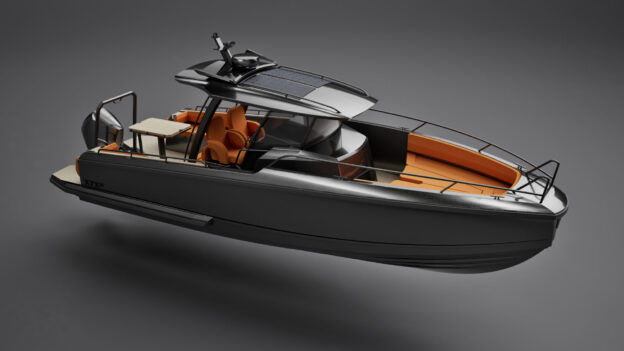
The objective is to build an understanding of the parametric workflow that can be transferred beyond the individual exercises. By combining the principles and modelling methods introduced throughout the course, you will develop the knowledge required to parametrically construct the centre-console boat geometry demonstrated in the course and to continue developing your own Grasshopper definitions from this foundation.
What will you learn?
By the end of the course, you will be able to:
- Understand the fundamental principles of parametric 3D modelling in Grasshopper and how geometry can be generated through connected components and relationships.
- Understand the principal strengths and limitations of Grasshopper and recognise when a parametric approach may be preferable to continuing the modelling process directly in Rhino.
- Navigate the basic Grasshopper user interface and work with the principal functions introduced throughout the course.
- Assemble Grasshopper components into clean and functional definitions for generating and controlling geometry.
- Understand how parametric relationships allow related geometry to respond to changes in dimensions, proportions and other defining parameters.
- Apply techniques for creating, controlling and refining NURBS surfaces parametrically.
- Develop yacht geometry progressively through practical exercises including a cockpit, floor liner, bathing platform and sheer line.
- Create and refine more complex yacht geometry, including hull-side and bow surfaces and a hardtop.
- Combine parametric modelling in Grasshopper with direct Rhino modelling where this provides a more efficient workflow.
- Apply the principles and techniques developed throughout the course to parametrically construct the centre-console boat geometry demonstrated by the instructor.
Course Organization
The course is video-based and available on demand, allowing you to learn at your own pace, wherever and whenever it suits you.
It includes video lessons, quizzes, downloadable materials, and access to the course’s private virtual classroom, where you can interact with the instructor and other students.
After completing all lessons, passing the quizzes, and receiving approval for your final assignment, you will receive a Course Certificate.
– Resources:
- Video lessons.
- Subtitles: English, Español, Français, Italiano.
- Downloadable materials.
- Quizzes.
- Final Assignment.
- Virtual Private Classroom.
- Course Certificate.
– Classroom:
– Prerequisites:
- To enroll in this course, you must have at least a Navalapp “Subscriber” membership (free).
Course Content
Introduction
The Instructor

Course Includes
- 31 Lessons
- Subtitles: English, Spanish, French, Italian
- Downloadable materials
- Final Assignment (Capstone Project)
- Course Evaluation Survey
- Virtual Private Classroom