
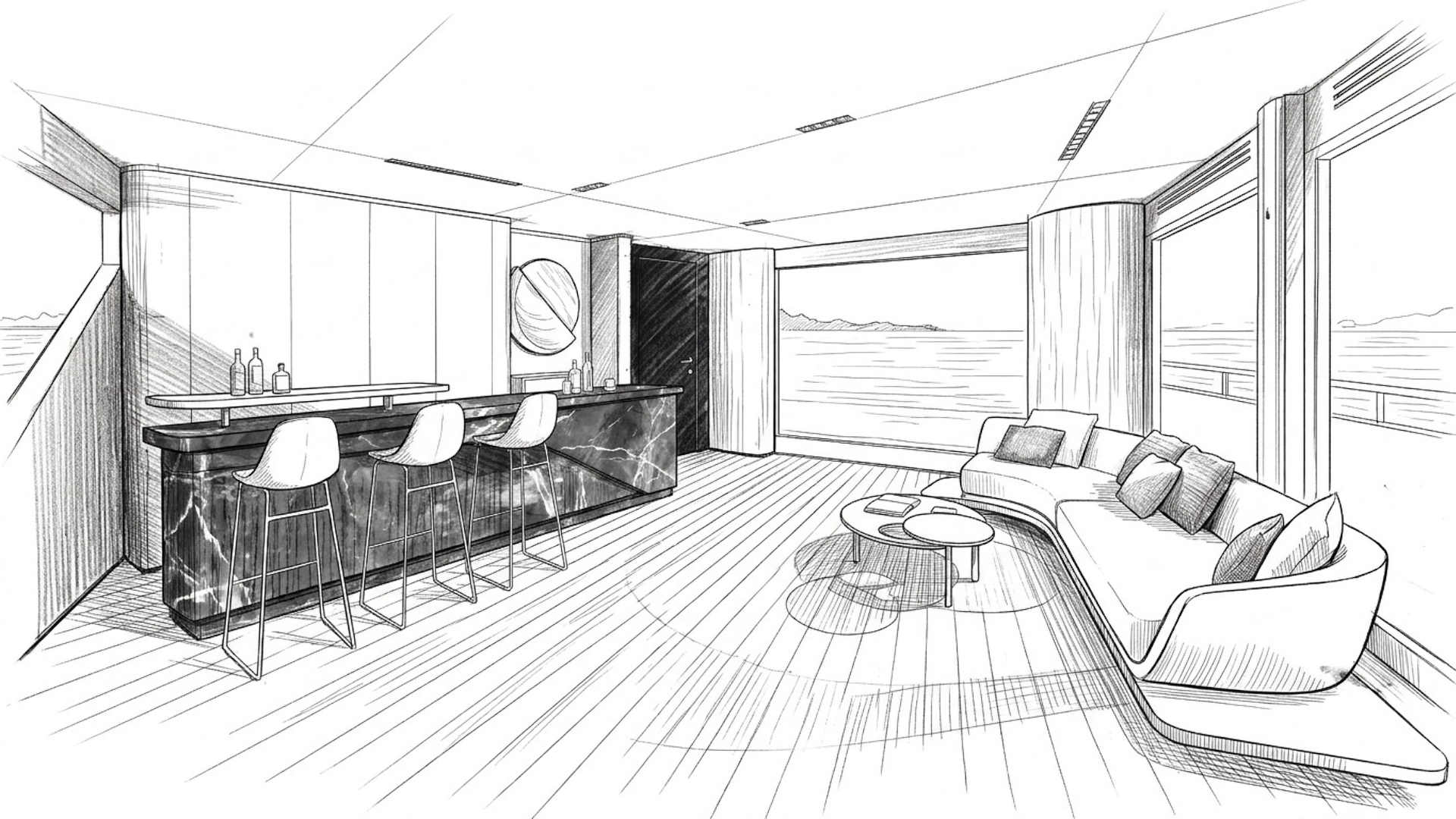
Yacht Interior Design 2


Early Access!
Early Access allows you to enrol in this course before its official release at a special discounted price, available exclusively during this period.
You can start learning immediately with the available course materials while we continue finalising and publishing the remaining lessons and resources.
Once the Early Access period ends, the course will be available in its complete form at its regular price. By enrolling during Early Access, you secure the discounted price while gaining access to the remaining content as it becomes available.
Welcome to the Course
Welcome to Yacht Interior Design 2, the second course in a three-course series dedicated to yacht interior design.
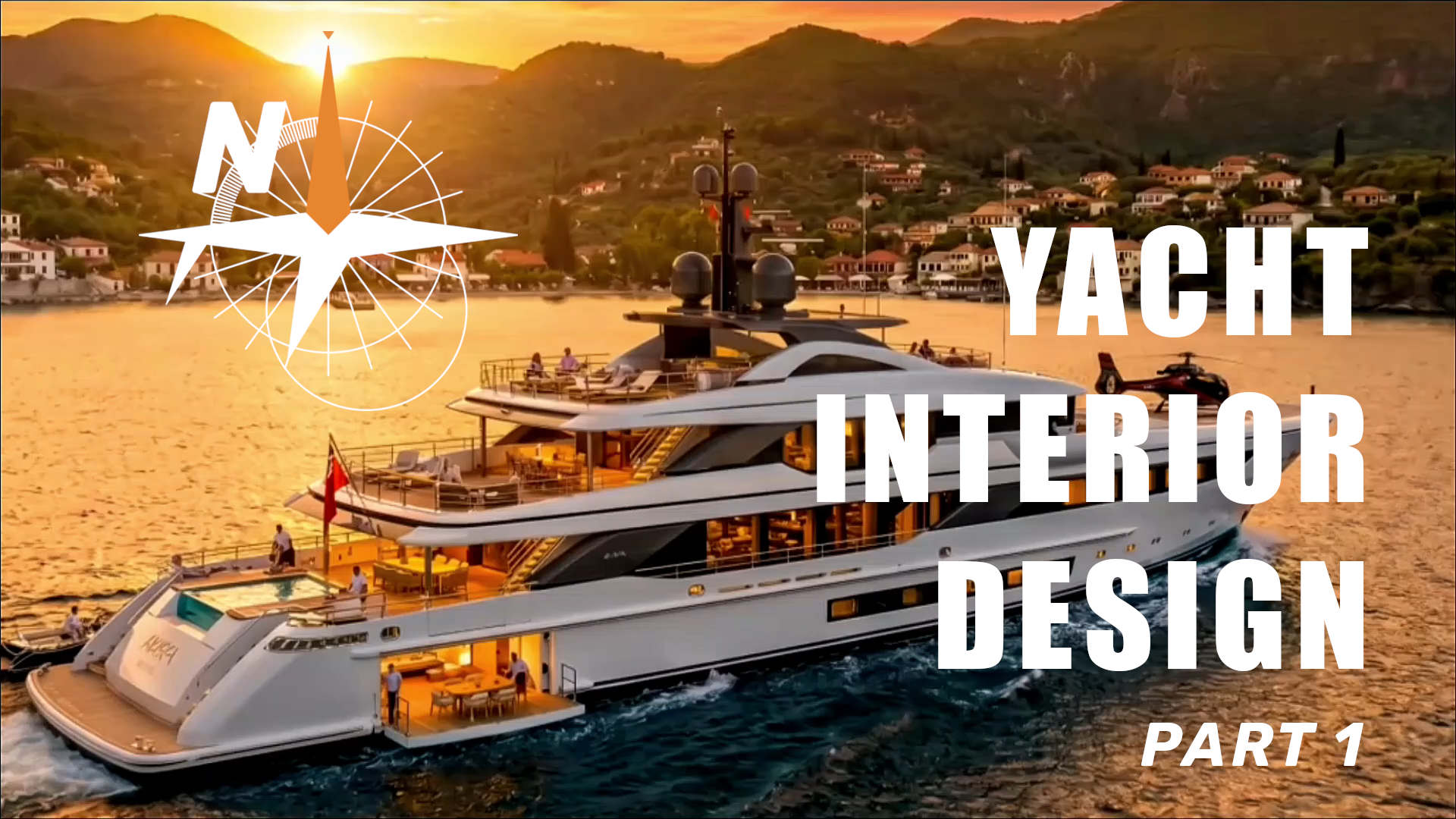
Building on the foundations established in Yacht Interior Design 1 and its focus on conceptual design, this course concentrates on the development phase of a yacht interior design project. It explores how initial concepts and preliminary layouts evolve into more detailed, spatially resolved, and technically considered proposals, preparing you to understand the transition from design development towards production.
You will deepen your understanding of luxury interior design, styles, colours, materials and finishes, space planning, General Arrangement development, ergonomics, three-dimensional modelling with Rhinoceros (Rhino), and the use of artificial intelligence for preliminary design visualisations. The course also introduces project planning, production considerations, and collaboration with shipyards and other members of the design team.
Led by Lisandro Torres and Yania Demaria, the course combines complementary perspectives on yacht interior design, technical development, and digital representation, connecting creative decisions with the practical requirements of yacht design and construction.
Course Overview
Yacht Interior Design 2 focuses on the development phase of a yacht interior design project, examining the aesthetic, spatial, technical, and practical considerations involved in transforming initial concepts into more developed proposals and preparing students to understand the transition towards production.
The course begins with luxury interior design, examining the meaning of luxury, interior design styles, current trends, and methods for translating stylistic references into design decisions. You will explore colour theory, colour schemes, combinations, compatibility, and optical effects, together with the principles and methods used to select and combine colours in interior spaces.
You will then examine materials and finishes from a technical perspective, considering marine-grade requirements, suppliers, samples, textures, patterns, shapes, weight, durability, and maintenance criteria. Particular attention is given to how these considerations influence material selection for yacht interiors.
The course continues with the planning and development of yacht interior spaces, examining spatial flow, human behaviour onboard, and the specific requirements of saloons and social areas, guest quarters, galleys and dining areas, and crew quarters. You will also study ergonomics, considering how these principles influence the functionality and usability of interior layouts.
A dedicated section addresses General Arrangement development and the architectural constraints that influence yacht interior design. You will explore the fixed envelope of a yacht, including bulkheads, engine rooms, tanks, hull geometry, and volumetric limitations, and consider how these elements affect preliminary layouts and the organisation of interior spaces.
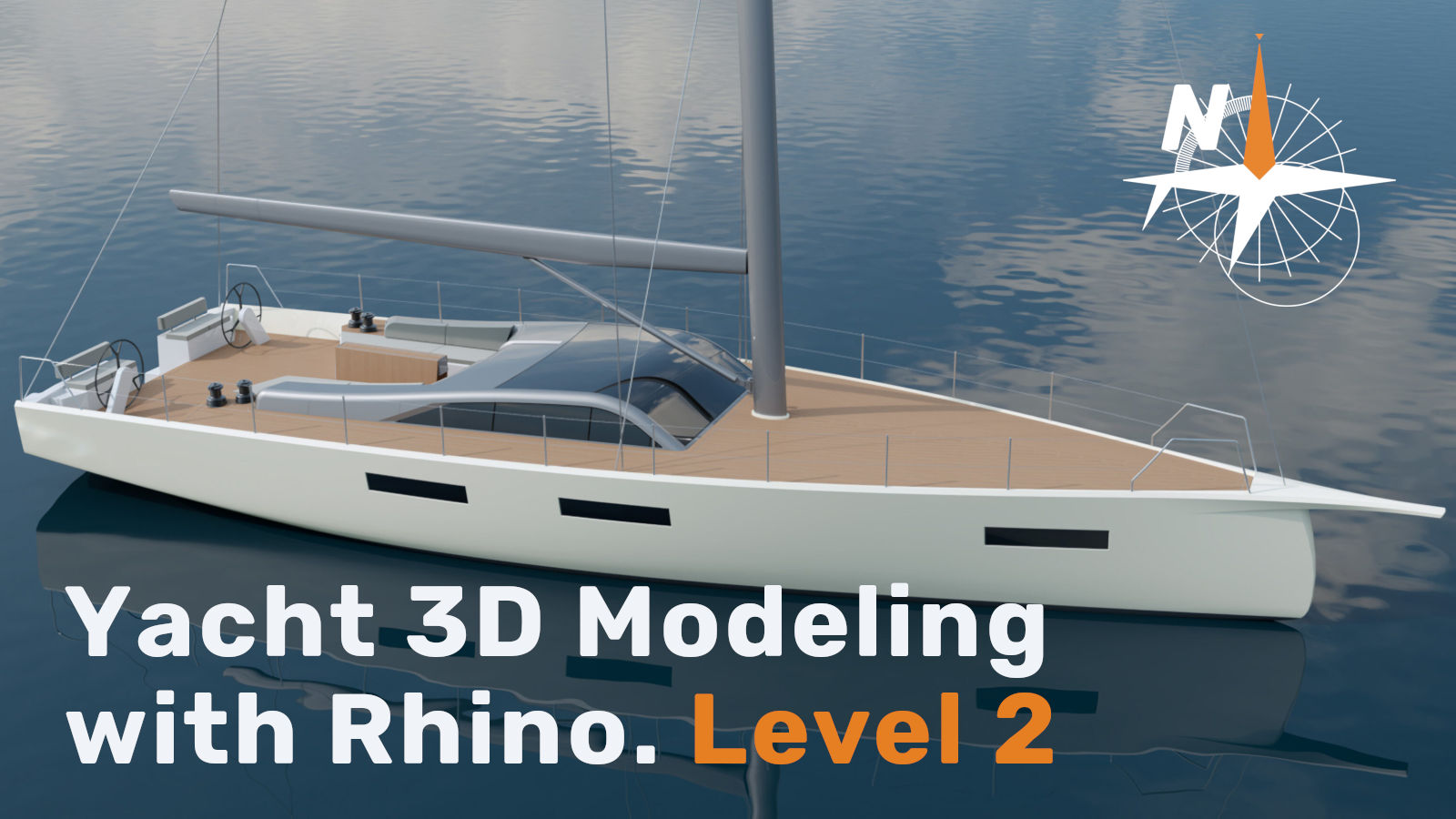
The course then introduces three-dimensional modelling using Rhinoceros (Rhino). You will learn to navigate the software, work with units and commands, create and edit three-dimensional geometry, take measurements, and use sections and clipping planes to examine interior volumes and spatial relationships.
These skills are complemented by an introduction to rendering and artificial intelligence tools for generating preliminary visualisations from your own 3D models, supporting the exploration and communication of interior design proposals.
In the final part of the course, you will examine yacht interior design project planning, including the principal phases and deliverables of an interior project, production considerations, and collaboration with shipyards and other members of the design team.
The course concludes with a practical project based on an existing 80-foot flybridge yacht. You will develop a General Arrangement layout, create a three-dimensional volumetric model of a selected interior space, evaluate its proportions, dimensions, and ergonomic feasibility, and produce an AI-assisted visualisation of your design proposal.
What You Will Learn
By the end of the course, you will be able to:
- Understand the development phase of a yacht interior design project, its relationship to conceptual design, and the transition from design development towards production.
- Recognise different approaches to luxury interior design, including classical and modern styles, and understand how trends and stylistic references influence design decisions.
- Understand colour theory, colour schemes, compatibility, combinations, and optical effects, and their application to interior design.
- Identify the technical considerations involved in selecting materials and finishes for marine environments, including marine-grade requirements, suppliers, samples, weight, durability, and maintenance.
- Understand the role of textures, patterns, shapes, and finishes in developing yacht interior design proposals.
- Analyse spatial flow, human behaviour onboard, and the functional requirements of different yacht interior areas, including saloons and social spaces, guest quarters, galleys and dining areas, and crew quarters.
- Understand how hull geometry, bulkheads, engine rooms, tanks, and volumetric constraints influence General Arrangement development and interior layouts.
- Develop General Arrangement layouts while considering architectural constraints, spatial organisation, and dimensional requirements.
- Apply ergonomic principles when evaluating the dimensions, proportions, and functionality of yacht interior spaces and layouts.
- Develop introductory three-dimensional modelling skills using Rhinoceros (Rhino), including creating, editing, and measuring 3D geometry, and using sections and clipping planes to examine interior volumes and spatial relationships.
- Understand how rendering and artificial intelligence tools can be used to produce preliminary visualisations from your own 3D models.
- Understand the principal phases, deliverables, and production considerations of yacht interior design projects, including collaboration with shipyards and other members of the design team.
- Apply the course content by developing a General Arrangement layout for an existing 80-foot flybridge yacht, creating a three-dimensional volumetric model of a selected interior space, evaluating its dimensions and ergonomic feasibility, and producing an AI-assisted visualisation as a final project.
Course Organization
The course is video-based and available on demand, allowing you to learn at your own pace, wherever and whenever it suits you.
It includes video lessons, quizzes, downloadable materials, and access to the course’s private virtual classroom, where you can interact with the instructor and other students.
After completing all lessons, passing the quizzes, and receiving approval for your final assignment, you will receive a Course Certificate.
– Resources:
- Video lessons.
- Subtitles: English, Español, Français, Italiano.
- Downloadable materials.
- Quizzes.
- Final Assignment.
- Virtual Private Classroom.
- Course Certificate.
– Classroom:
– Prerequisites:
- This course builds on the foundations established in Yacht Interior Design 1. If you are new to yacht interior design, we recommend starting with Level 1. However, completing Level 1 is not mandatory if you already have equivalent knowledge or experience.
- The course is suitable for students, designers, and professionals from related creative and technical fields. A general interest in yachts, interior design, materials, or the design process is recommended. Previous experience with CAD software (e.g., AutoCAD), sketching, technical drawing, or design presentation may be helpful, but is not required.
- No previous knowledge of Rhinoceros (Rhino) or 3D modelling is required. The course introduces the necessary Rhino fundamentals to enable students to develop the 3D model required for the final assignment.
- The course uses Rhino 6 or later versions. However, students who are already familiar with another 3D modelling software may use it to complete the final project. Using Rhino is not mandatory.
- To enroll in this course, you must have at least a Navalapp “Subscriber” membership (free).
Course Content
INTRODUCTION


Course Includes
- 46 Lessons
- Subtitles: English, Spanish, French, Italian
- Downloadable materials
- Quizzes
- Final Assignment (Capstone Project)
- Course Evaluation Survey
- Virtual Private Classroom