
Yacht Surveying 2
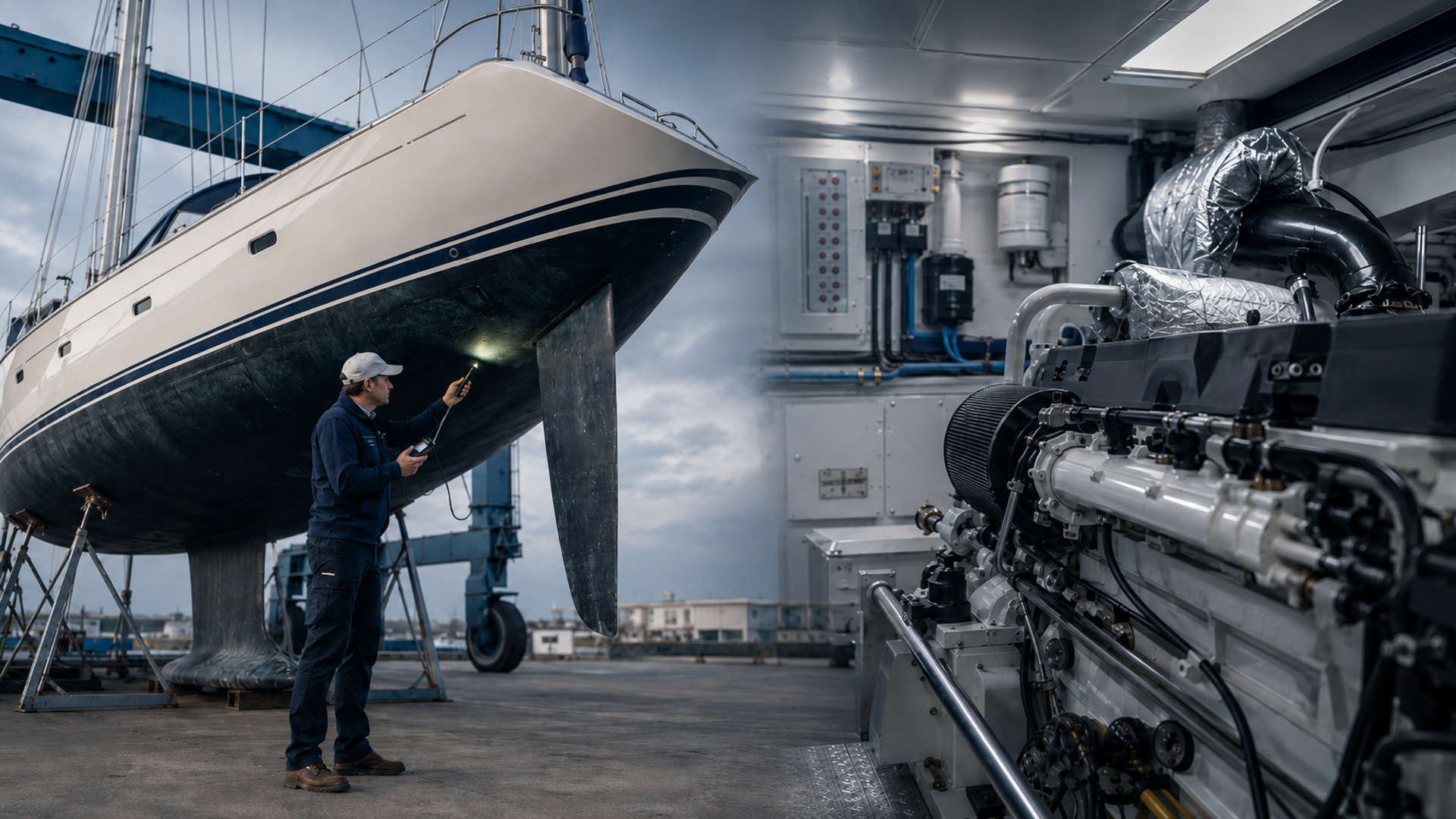
Yacht Surveying 2 takes a practical, evidence-led approach to yacht surveying, covering survey setup, client expectations, risk grading, defect interpretation, GRP construction, watertight integrity, steering and underwater appendages, machinery and propulsion, onboard systems, sailing-yacht equipment, safety systems, sea trials and commercial outputs. You will learn how to approach findings systematically, distinguish observations from possible mechanisms and root causes, recognise the limits of the available evidence, assess and prioritise risks, and determine when further investigation may be required. The course also develops the reporting discipline needed to translate survey observations into clear, proportionate conclusions, recommendations and practical survey outputs.

Welcome
Welcome to Yacht Surveying 2!
This course takes a practical, evidence-led approach to yacht surveying, focusing on how to inspect, interpret findings, assess their significance, recognise limitations, and translate observations into clear and proportionate conclusions and recommendations.
You will begin with survey scope, client expectations, on-site organisation, risk grading and defect interpretation before applying this methodology across GRP construction, watertight integrity, steering and underwater appendages, machinery and propulsion, onboard systems, sailing-yacht equipment, safety systems, sea trials and commercial outputs.
Throughout the course, particular attention is given to separating observation from inference, symptoms from possible root causes, and functional observations from technical verification.
Yacht Surveying 2 is designed to be valuable both for those developing their knowledge of yacht surveying and for professionals looking to deepen, structure, or broaden their existing expertise.
Let’s get started!
The Course
Yacht Surveying 2 begins with the professional disciplines that underpin a survey: defining scope, inclusions, exclusions and limitations; managing expectations; establishing deliverables; preparing documentation and access requirements; and organising the survey day, evidence capture and on-site sequence.
The course then develops a structured approach to risk grading and defect interpretation. You will examine severity, likelihood and consequence, and learn to prioritise findings around safety, watertight integrity, structural integrity, reliability and cosmetic considerations. The emphasis is on evidence-led reasoning—distinguishing an observed symptom from a possible mechanism or root cause, recognising when the available evidence is insufficient, and framing conclusions around observation, implication, limitation and recommended next action.
This methodology is then applied across the technical areas covered by the course. GRP surveying addresses laminate architecture, solid and sandwich construction, structural arrangements, secondary bonding, typical defects, damage indicators and non-destructive testing logic. Watertight integrity and flooding risk are considered through hull openings, seacocks, hoses, deck penetrations, leak paths, bilge arrangements, pumps, backflow and alarms.
Further modules cover steering systems, rudders, bearings, seals and keel attachments; engine-room inspection and propulsion trains; AC/DC electrical installations; freshwater, grey-water and black-water systems; LPG; and HVAC. The focus extends beyond individual components to how systems interact, where wear or failure indicators may appear, how observations can be correlated, and when further investigation or specialist assessment should be recommended.
For sailing yachts, the course examines masts and spars, standing rigging and chainplates, running rigging, deck gear and sails. Additional modules address anchoring and mooring equipment, fire protection and lifesaving appliances, and the practical conduct and reporting of sea trials.
The course also addresses outputs associated with the wider survey and sale process. You will examine how inventory, spares and items stated as included in a sale can be recorded with appropriate traceability; how valuation can combine market evidence, vessel condition and stated assumptions; and how survey findings can be translated into repair specifications with clearly defined scope and acceptance criteria.
Across all these subjects, a consistent reporting discipline remains central: record what was observed, explain why it matters, state what could not be confirmed, avoid unsupported conclusions, and recommend a proportionate next step.
What will you learn?
By the end of Yacht Surveying 2, you will be able to:
- Define survey scope, inclusions, exclusions, limitations and deliverables, and apply structured principles to client briefing, preparation, evidence capture and on-site sequencing.
- Assess and prioritise findings using severity, likelihood and consequence, with reference to safety, watertight integrity, structural integrity, reliability and cosmetic considerations.
- Distinguish symptoms from possible mechanisms and root causes, and formulate evidence-led conclusions that separate observation, implication, limitation and recommended action.
- Understand GRP construction logic and recognise typical damage, deterioration and inspection indicators, including where non-destructive testing or further investigation may assist assessment.
- Assess watertight-integrity and flooding risks associated with hull openings, deck penetrations, leak paths, bilge arrangements, pumps, backflow and warning systems.
- Examine steering, rudder, bearing, seal and keel-attachment arrangements, together with engine rooms and propulsion trains, and recognise relevant indicators of wear, leakage, movement, impact or operational concern.
- Identify visible hazards, serviceability concerns and inspection limitations within AC/DC electrical, plumbing, LPG and HVAC systems, and recognise when specialist assessment is appropriate.
- Assess sailing-yacht masts and spars, standing and running rigging, chainplates, deck gear and sails using load-path thinking, visible condition, serviceability and inspection limitations.
- Evaluate anchoring and mooring arrangements, fire protection and lifesaving appliances with regard to condition, accessibility, suitability and practical readiness.
- Conduct and document a structured sea-trial assessment, recording operating conditions and observations and correlating them with findings from other phases of the survey.
- Record inventory, spares and sale-related items with appropriate traceability, and apply structured principles to valuation and repair specifications using evidence, stated assumptions, clear scope and acceptance criteria.
Course Organization
The course is video-based and available on demand, allowing you to learn at your own pace, wherever and whenever it suits you.
It includes video lessons, quizzes, downloadable materials, and access to the course’s private virtual classroom, where you can interact with the instructor and other students.
After completing all lessons, passing the quizzes, and receiving approval for your final assignment, you will receive a Course Certificate.
– Resources:
- Video lessons.
- Subtitles: English, Español, Français, Italiano.
- Downloadable materials.
- Quizzes.
- Final Assignment.
- Private Virtual Classroom.
- Course Certificate.
– Classroom:
– Prerequisites:
- This course builds on the foundational knowledge covered in Yacht Surveying 1. If you are new to yacht surveying and do not have a relevant marine background, we recommend completing Yacht Surveying 1 before progressing to Yacht Surveying 2.
- If you already have basic knowledge or relevant experience in yacht operations, naval architecture or marine engineering, boatbuilding, yacht management, or a related marine field, you may already have the background required to take this course directly.
- Yacht Surveying 2 is also suitable for those seeking to deepen their understanding of yacht surveying at an entry or junior professional level. Before enrolling, we recommend reviewing the Yacht Surveying 1 course page to ensure that you are familiar with its core topics.
- To enroll in this course, you must have at least a Navalapp “Subscriber” membership (free).
Course Content
Introduction
The Instructor


Course Includes
- 35 Lessons
- Subtitles: English, Spanish, French, Italian
- Downloadable materials
- 29 Quizzes
- Final Assignment (Capstone Project)
- Course Evaluation Survey
- Virtual Private Classroom
- Course Certificate